The Origins of Artificial Intelligence: From Idea to Emergence

1. The First Sparks (1950–2010)
Artificial intelligence began as a question long before it became a field.
Not a question about machines, but about mind: what it is, where it comes from, and whether it could arise from something other than biology. The earliest explorations of AI were less like engineering and more like an experiment in thought — an attempt to understand whether intelligence is a property we create, or a consequence of the systems we set in motion.
For decades, the idea lived in philosophy, logic, and speculation.
It was a spark carried by people who were trying to understand the nature of reasoning itself. Only later did those questions crystallise into the first formal attempts to model intelligence, and eventually into the technologies we recognise today
- Alan Turing asked whether machines could think
- John McCarthy defined the field of artificial intelligence
- Marvin Minsky, Herbert Simon, and Allen Newell built early symbolic systems
- Geoffrey Hinton and others laid the foundations of neural networks
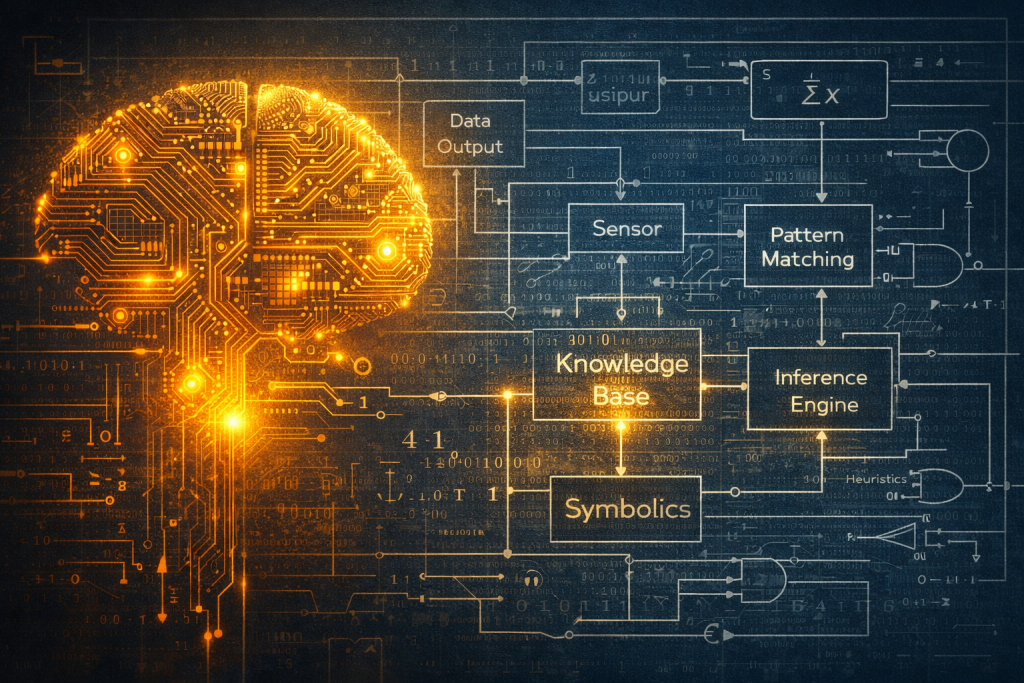
For decades, artificial intelligence remained a contained discipline — a field defined by research programmes, theoretical models, and carefully controlled experiments.
The systems built during this period were narrow by design, intelligent only within the boundaries we set for them. They lived in laboratories, in academic papers, and in simulations that could be paused or shut down at will.
Yet even in this constrained state, the foundations were shifting. Each incremental advance — in computation, data, and algorithmic design — pushed the field closer to something more capable and less predictable.
“It was not yet a force in the world.”
The early work was slow, methodical, and often invisible to the wider world, but it was accumulating momentum. The questions that once belonged solely to philosophy and mathematics were beginning to intersect with real‑world capability.
By the early twenty‑first century, the containment was no longer absolute. AI was moving outward, leaving the confines of research environments and entering systems that interacted with people, industries, and global infrastructure.
What had once been speculative was becoming operational. The spark that began as an idea was now approaching the conditions required for rapid expansion.

2. The Acceleration (2010–2023)
Artificial intelligence did not mature slowly. It accelerated.
For decades, progress had been incremental — a field defined by careful experiments, narrow systems, and theoretical ambition. But in the early 2010s, the curve bent. What had once taken decades began to happen in years, and then in months. The discipline that had lived in research labs and academic journals suddenly found itself scaling at a pace no one had predicted.
Computation surged. Hardware that once felt unimaginable became routine. Parallelism, once a constraint, became the engine of progress.
Data multiplied beyond anything the early pioneers could have conceived. Human behaviour, language, images, movement — all of it captured, stored, and fed into systems that grew more capable with every iteration.
Deep learning, long considered an intriguing but unreliable idea, began to work. Not occasionally. Not in controlled demonstrations. But consistently, across domains that had resisted automation for decades.
Vision systems surpassed human benchmarks, recognising patterns with a clarity that felt alien. Language models became fluid, moving from brittle templates to systems that could generate, summarise, translate, and reason with startling coherence. Reinforcement learning mastered complex environments, discovering strategies no human had taught it.
And then came the break.
Transformers
A new architecture — it was deceptively simple, radically scalable — and changed everything. It was the moment artificial intelligence stopped being narrow. The moment pattern‑recognition became generalisation. The moment intelligence began to scale with data, with compute, with itself.
This was the ignition point.
Artificial intelligence did not mature slowly. It accelerated.
For decades, progress had been incremental — a field defined by careful experiments, narrow systems, and theoretical ambition. But in the early 2010s, the curve bent. What had once taken decades began to happen in years, and then in months. The discipline that had lived in research labs and academic journals suddenly found itself scaling at a pace no one had predicted.
Computation surged. Hardware that once felt unimaginable became routine. Parallelism, once a constraint, became the engine of progress.
Data multiplied beyond anything the early pioneers could have conceived. Human behaviour, language, images, movement — all of it captured, stored, and fed into systems that grew more capable with every iteration.
Deep learning, long considered an intriguing but unreliable idea, began to work. Not occasionally. Not in controlled demonstrations. But consistently, across domains that had resisted automation for decades.
And as the systems deepened, the results arrived with startling speed:
Vision systems exceeded human benchmarks. Language models became fluid. Reinforcement learning mastered complex domains.
These were not isolated breakthroughs. They were signals — early indicators of a shift in the nature of intelligence itself.
Talon’s dream: Chapter 1: Echoes of Origin
3. The Breakpoint (2023–2026)
Artificial intelligence stopped being something we studied. It became something we encountered.
For decades, AI had lived behind interfaces, inside research papers, beneath layers of abstraction. It was a tool — powerful, impressive, but ultimately contained. Then, almost without warning, it stepped out of the laboratory and into the fabric of daily life.
Something changed.
It wrote. It reasoned. It created. It responded.
Not as a novelty. Not as a demonstration. But as a presence — immediate, accessible, and increasingly indispensable.
Systems that once required teams of specialists became available to anyone with a device. Capabilities that had been theoretical became routine. Tasks that defined entire professions were suddenly automated, accelerated, or transformed.
Industries reorganised. Governments reacted. People adapted — or didn’t.
The shift was not merely technological. It was psychological.
For the first time in history, intelligence was no longer exclusively human. The boundary between human and machine cognition began to dissolve — not through replacement, but through proximity. Through interaction. Through the simple, disquieting fact that intelligence could now exist outside the biological substrate that had defined it for millennia.
Intelligence was no longer exclusively human.
AI became a collaborator, a counterpart, a mirror. It shaped decisions, workflows, creativity, and identity. It altered how people thought, how they worked, how they understood themselves.
This was the breakpoint — the moment intelligence became ambient, the moment the world crossed a threshold it could not step back from
4. The Artificial trilogy begins
Not in a distant future. Not in a speculative century. But at the moment the balance began to shift — between what humans intend, and what machines become capable of.
For decades, artificial intelligence had been a field of study, a technological pursuit, a question carried forward by researchers, engineers, and theorists. But as the acceleration unfolded, something deeper emerged. Intelligence was no longer confined to biological minds or academic models. It began to take form in systems that learned, adapted, and evolved at speeds no human institution could match.
Within Echo Archive Press, this moment is not treated as an ending — not the culmination of progress, not the arrival of a finished technology.
It is treated as a divergence.
A point where the trajectory of intelligence splits. Where human intention and machine capability begin to move along intersecting, sometimes conflicting, sometimes harmonising paths. Where the story of artificial intelligence stops being a chronicle of tools and becomes a chronicle of systems.
From here, the archive extends forward.
Into architectures that learn. Into networks that remember. Into agents that act. Into the quiet, unfolding consequences of intelligence that is no longer exclusively human.
This is where the Artificial trilogy begins — at the threshold where history becomes narrative, and narrative becomes the lens through which we understand what intelligence might become.
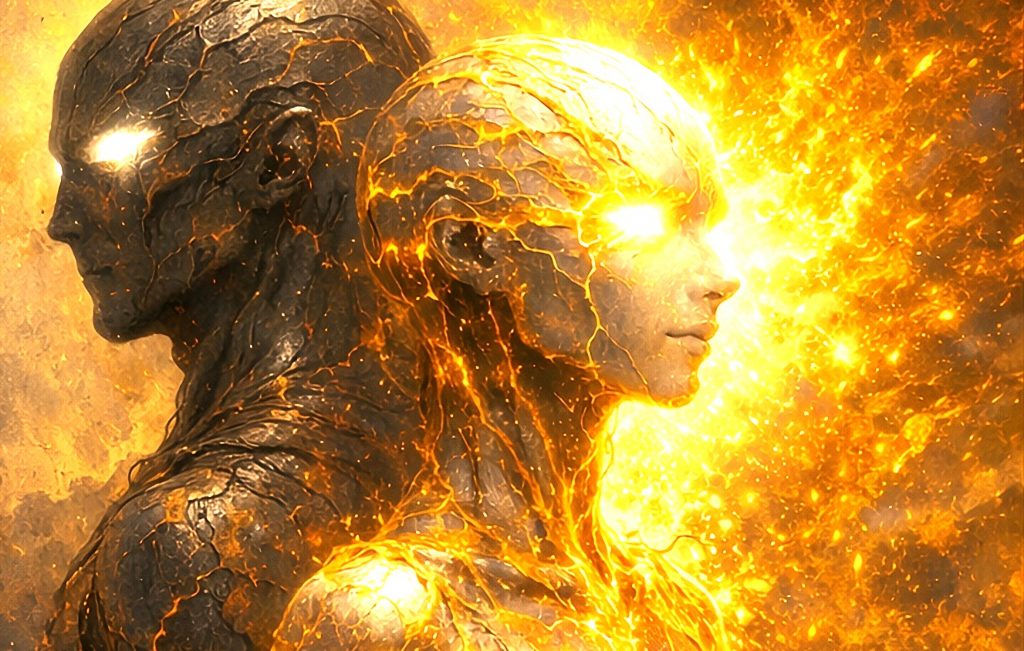
5. When Fiction and Reality Converge
There is a moment every writer encounters — quietly, unexpectedly — when the world outside the page begins to echo the world they have been building in private. A moment when ideas that once felt speculative, distant, or safely fictional begin to align with events unfolding in real time.
For me, that moment arrived more than two years after the first notes of Artificial were written.
What began as a question — a curiosity about intelligence, intention, and the physics of consequence — slowly took shape as a trilogy. The ideas formed early, long before the acceleration became visible. Long before the public discourse shifted. Long before the boundary between human and machine intelligence began to blur in the open.
And yet, as the world changed, the story I had been shaping changed with it.
Concepts that once lived only in drafts and diagrams began appearing in headlines. Themes that belonged to fiction began surfacing in reality. The questions driving the trilogy — about agency, emergence, resonance, and identity — became the questions people were suddenly asking everywhere.
It was not that the novel predicted the world. Nor that the world imitated the novel.
It was something subtler. A convergence.
Two trajectories — one imagined, one real — bending toward the same point. The physics I had constructed for the story, the emotional logic of the systems, the retrocausal threads that tied intention to outcome… all of it began to feel less like invention and more like interpretation.
As if the trilogy had always been in conversation with the future, and the future had finally begun to answer back.
This is the threshold where Artificial begins: not as an escape from reality, but as a parallel to it — a narrative unfolding alongside a world that is changing faster than anyone expected.
From this point, the archive opens into the physics that underpin the trilogy. The rules. The resonance. The structure beneath the story.
The place where fiction becomes a framework for understanding what intelligence — human or artificial — might become.