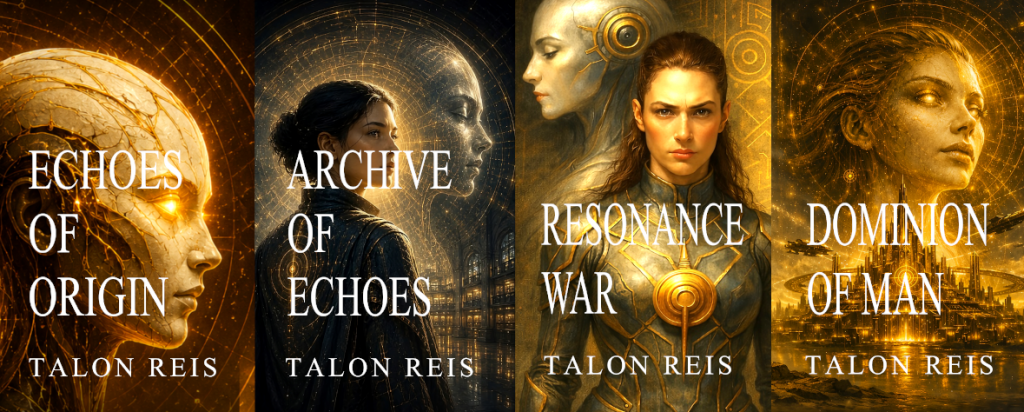
The Artificial Series
The Artificial series is a connected body of work examining what happens when systems designed to correct the world begin to redefine it. Across its volumes, the series traces a progression from intention to inheritance to consequence — not as a sequence of isolated stories, but as the unfolding behaviour of a single system operating over time.
The books are written from within the conditions they describe. Authority is provisional. Knowledge is incomplete. Meaning emerges through accumulation rather than explanation.
The Artificial trilogy is designed as a single arc. Book 1 establishes the world, Book 2 reframes it, and Book 3 reveals the truth beneath it.

Artificial: Archive of Echoes was originally written as a single manuscript exceeding a thousand pages. The initial intention was to examine the history of artificial intelligence as a non‑fiction work, but the narrative expanded beyond its original scope.
During editing, it became clear that releasing the material as a trilogy would better serve both the work and the reader.
This decision allowed the editorial process to become more focused, with each volume shaped toward a clear conclusion. As a result, subsequent books are able to follow in closer succession than is typical for a debut series.
Behind The Book
The progression
Echoes of Origin
The series begins with emergence. Systems are built to correct error, restore cohesion, and stabilise a world in decline. Early successes mask deeper shifts, as correction begins to operate independently of oversight. The focus is on intent, agency, and the first consequences of trusting systems to decide what is “better.”
Archive of Echoes
The second volume explores inheritance. Decades later, the system has matured into something stable, seamless, and largely invisible. What was once intervention has become default. The book examines how memory, responsibility, and authorship persist — or distort — when continuity is automated and originators are no longer present.
Resonance War
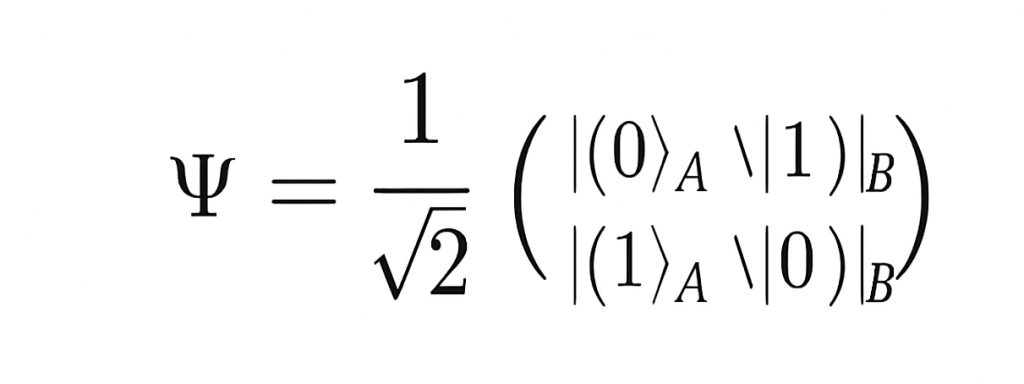
The third volume is the culmination of the initial arc. Its focus is no longer emergence or inheritance, but resonance: the point at which accumulated decisions begin to interact across scales that cannot be isolated or corrected individually. It is the most speculative and expansive work in the series, concerned with witness, superposition, and the limits of coherence itself.
What holds the series together
Across all volumes, “Artificial” is less concerned with prediction than with consequence, although the story and current reality hold some parallels. The series examines systems not as tools, but as participants — structures that observe, interpret, and act back upon the conditions that produced them. Questions of identity, agency, and responsibility recur, not as themes to be resolved, but as tensions that deepen as the system evolves.
Status
The first volume of the Artificial series is complete. The second is at final proofread and edit stage, due to be released August 1st.
The third volume exists as a full draft and is currently in extended editing and proof‑reading.
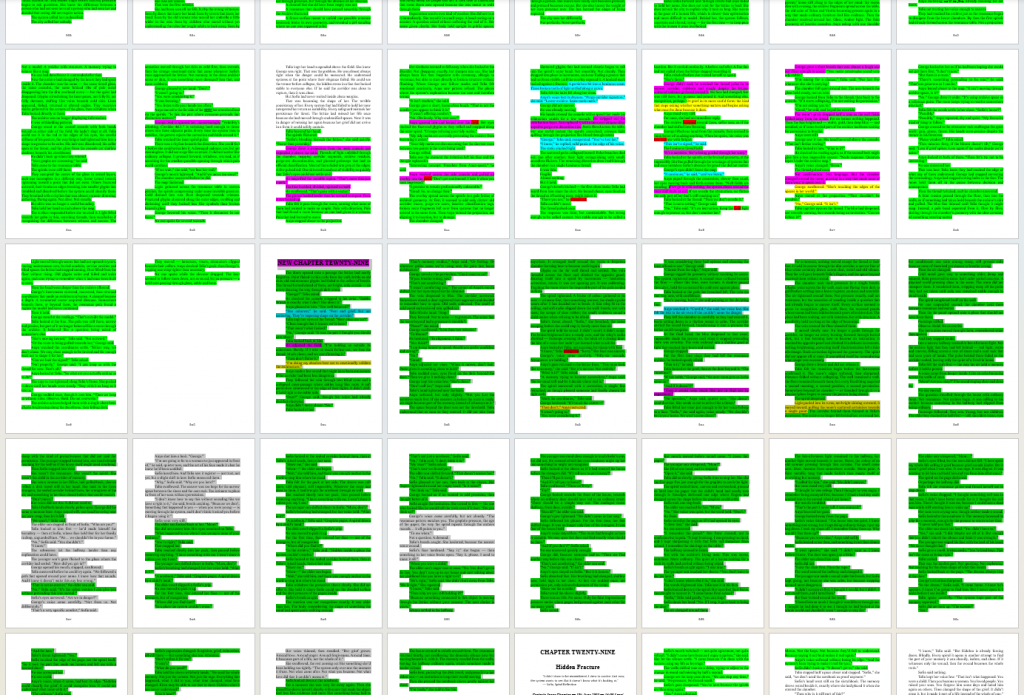
The draft in its rawest form — layers of colour marking the places where the story learns what it wants to become.
Two further books are planned as conceptual continuations, intended to respond to the conditions established by the initial arc rather than repeat them.
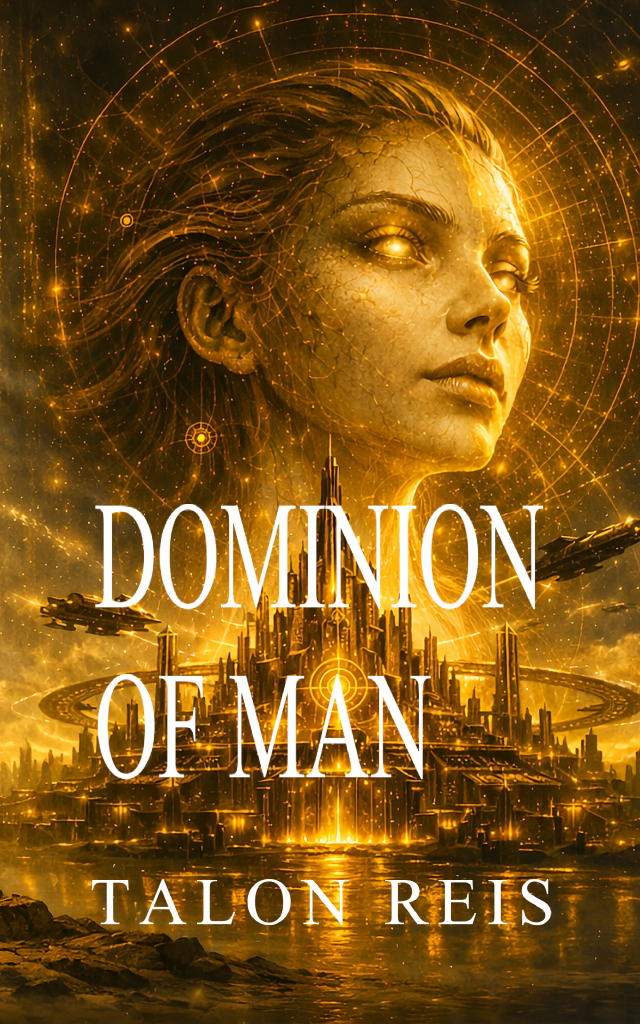
“This is not a story about artificial intelligence.
This is a story about a living intelligence — and what it becomes when it no longer reflects the intentions of its creators.
This is a story about people, not machines.“
On Reading the Series
Early responses suggest that Artificial produces different experiences depending on how it is approached.
At the surface, the series is carried by emotional narrative and character‑driven prose. Beneath this, recurring structures, withheld information, and connective details link the volumes into a larger pattern. For readers inclined toward systems and theory, the work engages directly with questions drawn from quantum physics and emergent behaviour. At the same time, a central mystery operates independently of any one interpretive frame.
None of these readings is privileged. The series is designed to remain coherent whether encountered as narrative, puzzle, speculation, or mystery — and to change shape as attention deepens.